





Every transfer window, every training camp, every touring squad — somewhere in the background, a visa application is quietly deciding whether any of it actually happens. I’ve sat on both sides of this: advising clubs and governing bodies as a solicitor, and negotiating deals as an agent where the immigration route was, frankly, the thing that nearly killed it. The UK sports visa system isn’t one visa. It’s three separate routes, each doing a different job, and mixing them up is the single most common reason deals fall over late.
This guide walks through all three — the International Sportsperson visa for elite athletes and coaches, the Sports Visitor visa for short trips, and the Skilled Worker visa, which since 2025 has become a genuine headache for clubs trying to bring in support staff. We’ll cover eligibility, the points system, football’s own endorsement rules, costs, timings, and where applications actually go wrong.
What Is the UK Sports Visa? An Overview of the Three Routes
There isn’t a single document called the ‘UK sports visa.’ That phrase, as commonly searched, actually covers three quite different immigration routes, and picking the wrong one is where most avoidable refusals come from.
- International Sportsperson visa — for elite, professional athletes and qualified coaches employed in the UK. Leads to settlement.
- Sports Visitor visa — for short, unpaid trips of up to six months: tournaments, trials, amateur training. No work, no settlement.
- Skilled Worker visa — used by sports organisations for non-playing staff — physiotherapists, analysts, technical and commercial roles — and significantly tightened since July 2025.
Get the category wrong and, at best, you lose weeks. At worst, the application is refused outright and the athlete misses the window entirely. So let’s take them one at a time.
The International Sportsperson Visa: Eligibility Explained
This route replaced the old Tier 2 (Sportsperson) and Tier 5 (Creative and Sporting) visas, folding both into one streamlined category. It’s built for genuinely elite sportspeople and qualified coaches — people who are, in the words of the Immigration Rules, ‘internationally established’ and able to make a significant contribution to their sport at the highest level in the UK.
Uk sports visa eligibility for this route rests on three legs, and all three have to be in place before an application even goes in:
- Governing Body Endorsement (GBE) — confirmation from your sport’s recognised UK governing body that you’re elite, or that your coaching role genuinely develops the sport at the top level.
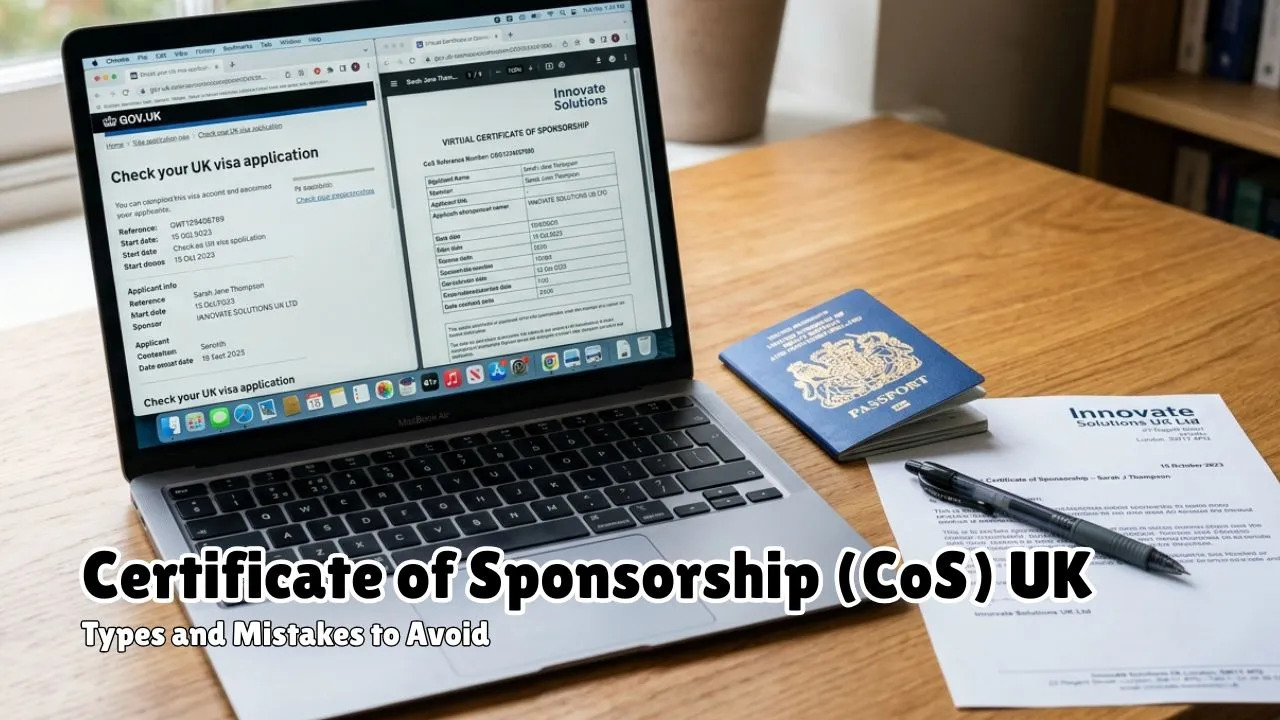
- Certificate of Sponsorship (CoS) — issued by a Home Office-licensed sponsor, naming the job, the salary, and confirming it’s genuinely sportsperson-level work.
- Sufficient points — 70 for permission of 12 months or less, 80 for anything longer (more on that below).
On top of that: a genuine intention and ability to do the job, financial maintenance of £1,270 held for 28 days (unless your sponsor certifies maintenance on the CoS), and — for grants of more than 12 months — the English language requirement at CEFR level A1. Under 12 months, there’s no language requirement at all, which surprises a lot of clients.
Who Actually Counts as ‘Elite’?
This is where GBE decisions genuinely differ sport by sport. Governing bodies — the FA, the RFU, the LTA, UK Athletics, and dozens more — each set their own published criteria, agreed in advance with the Home Office. Football and rugby tend to lean on quantifiable data (minutes played, league standard, international caps). Individual sports like tennis or athletics lean more heavily on rankings and competition results. Coaches are usually assessed on their coaching CV and the calibre of athletes they’ve worked with.
Three-Stage Process for UK Sports Visa: GBE Then Certificate of Sponsorship
It genuinely is two separate stages, run in sequence, not parallel — and clients constantly underestimate how long stage one can take.
- Governing Body Endorsement. The sponsoring club or organisation applies to the relevant governing body on the athlete’s behalf. Each sport has its own turnaround; football and rugby can move quickly, some smaller federations take considerably longer.
- Certificate of Sponsorship. Once the GBE letter (with its unique endorsement number) is in hand, the sponsor — who must already hold a valid sponsor licence — assigns a CoS through the Sponsorship Management System.
- Visa application. The athlete applies online, referencing the CoS number, up to three months before their start date. Biometrics and identity documents follow, either at a visa application centre or via the UK Immigration: ID Check app.
No GBE, no CoS. No CoS, no visa application. It really is that linear — you cannot skip ahead, however tight the transfer deadline.
How the Points System Works for a UK Sports Visa: 70 Points vs 80 Points
The International Sportsperson visa sits inside the UK’s points-based system, but it’s a much simpler scoring model than, say, the Skilled Worker route. All points are mandatory — there’s no trading one requirement off against another.
| Permission sought | Points required | How they’re made up |
|---|---|---|
| 12 months or less | 70 points (Table A) | Governing Body Endorsement (50) + valid Certificate of Sponsorship (20) |
| More than 12 months | 80 points (Tables A + B) | Table A (70) + English language at CEFR A1 (10) |
Miss any element and the whole application fails — there’s no partial credit. That’s worth repeating to clients who assume a strong GBE alone will carry a weak or late CoS.
Football’s Own Rules: The GBE Points System Explained
Football runs its own, far more granular version of GBE, administered by the FA, and it’s worth understanding in its own right because it trips up more transfer deals than any other part of the system.
- Auto Pass — a player who has featured in enough of his national team’s senior competitive matches, weighted against that nation’s FIFA ranking, passes automatically. No further scoring needed.
- 15-point system — players who don’t auto-pass are scored across international appearances, domestic and continental minutes, league quality (leagues are banded 1–6), final league position, and continental progression. Reach 15, you’re endorsed.
- Exceptions Panel — score 10–14 points, and the club can pay a fee (currently £5,000 plus VAT) to have an independent panel argue exceptional circumstances.
- ESC route (Exceptions/Significant Contribution) — a further route for clubs to sign a limited number of players who fall short of 15 points outright — Premier League and Championship sides can currently use up to four ESC places, League One and Two clubs up to two, with places tied to how much game time is given to home-grown-eligible players.
The FA reviews and re-bands the whole system roughly every summer, so a league that qualified for Band 2 minutes last season might drop to Band 3 the next. If you’re an agent working a deal, that’s not a footnote — it can be the difference between a done deal and a dead one, and it’s exactly the kind of detail that separates people who understand recruitment from people who just watch the football.
A refusal under one GBE route (say, the 15-point test) now blocks a fresh application for the same player under a different route — including ESC — within the same transfer window. Get the first application right; there’s no quiet second attempt any more.
UK Sports Visitor Visa: Short-Term Visits Explained
Not everyone needs — or should apply for — the International Sportsperson visa. If you’re coming to the UK for a tournament, a trial, a short unpaid training block, or to join an amateur club, the Sports Visitor visa (a sub-category of the Standard Visitor route) is very often the right and much simpler answer.
Permitted Activities on a Sports Visitor Visa
- Compete individually or as part of a team in a tournament or sporting event
- Make personal appearances and take part in promotional activities
- Attend trials, provided there’s no paying audience
- Undertake short periods of training, provided you’re not paid by a UK sporting body
- Join a genuinely amateur club or team to gain experience in your sport
- Personal or technical staff — physios, coaches, dieticians, press officers — may also enter as visitors, provided they’re employed to support the athlete outside the UK
Sports officials, too, can qualify — invited by a UK sports organisation, agent, or broadcaster, or by an athlete who’s themselves travelling on a sports visitor basis.
The Genuine Visitor Requirement
Every one of these applications turns on the same test: is this a genuine visitor, who will leave at the end of the visit and isn’t using repeated trips to effectively live in the UK? This is the single most subjective part of the whole process, and it’s where a lot of amateur sportspeople and touring support staff get caught out — vague travel plans, thin evidence of ties back home, or a stay that just looks a bit too long for what’s described.
Payment is the other trap. Prize money and reasonable expenses are fine. A salary from a UK source is not — that tips you straight out of the visitor category and into needing the International Sportsperson route instead, even if nobody involved thought of it as ‘proper’ employment.
- Standard duration: up to 6 months per visit
- Fee for a single visit: £115
- Long-term multi-entry visit visas also available: £400 (2 years), £771 (5 years), £963 (10 years) — each individual visit still capped at 6 months
- Does not lead to settlement, ever, regardless of how many times it’s renewed
2025 Skilled Worker Changes: What They Mean for Sports Support Staff
This is the bit most general guides skip entirely, and it’s become genuinely painful for clubs. Following the Immigration White Paper and the Statement of Changes that took effect on 22 July 2025, the Skilled Worker route — which is what clubs have always used for physiotherapists, sports scientists, data analysts, groundstaff engineers and commercial staff — got substantially harder to use.
The Headline Changes
- Minimum skill level up to RQF 6 — roughly graduate level, up from RQF 3. Around 100+ occupations, including many roles clubs previously relied on, dropped out of eligibility entirely.
- General salary threshold now £41,700 — up from £38,700, or the ‘going rate’ for the specific occupation code, whichever is higher.
- Immigration Salary List abolished — being phased out by December 2026 and replaced by a much narrower Temporary Shortage List, with roles requiring 100% of the going rate rather than a discount.
- No transitional protection for extensions — anyone renewing or switching sponsor on or after 22 July 2025 is assessed against the new, higher thresholds, regardless of when their original CoS was issued.
For a sports organisation, that’s meant real, practical fallout. Technical and motorsport engineering roles can sometimes still be sponsored via the Temporary Shortage List, but without dependants and with a shorter shelf-life on the sponsorship itself. Some genuinely important, longstanding support roles — certain groundstaff and pitch specialists among them — have simply fallen out of eligibility altogether, because the underlying job doesn’t sit at graduate skill level however essential it is to matchday operations.
Worth stressing: the International Sportsperson visa itself hasn’t been touched by any of this. Players and coaches are unaffected. It’s everyone else around them — the wider team, quite literally — who now faces a materially harder route in.
Quick Comparison: International Sportsperson vs Sports Visitor vs Skilled Worker
| Feature | International Sportsperson | Sports Visitor | Skilled Worker (support staff) |
|---|---|---|---|
| Who it’s for | Elite athletes & coaches | Amateurs, pros on short trips, support staff | Non-playing staff (physios, analysts, etc.) |
| Paid work in UK? | Yes, by sponsor | No — expenses/prize money only | Yes, by sponsor |
| Max duration | Up to 3 years, extendable | 6 months per visit | Up to 5 years, extendable |
| Route to settlement? | Yes, after 5 years | No, never | Yes, after 5 years |
| Key requirement | GBE + CoS + 70/80 points | Genuine visitor test | RQF 6 role + £41,700 / going rate |
| English requirement | A1, only if over 12 months | None | B1 required |
Which UK Sports Visa Route Leads to 5-Year Path to Settlement
Both the International Sportsperson route and the Skilled Worker route can lead to Indefinite Leave to Remain — settlement — after five years’ continuous residence. For the International Sportsperson visa specifically, that five-year period must include at least one grant of permission exceeding 12 months, and the applicant must not have fallen foul of the general suitability requirements along the way.
- Continuous residence: broadly no more than 180 days’ absence in any rolling 12-month period
- At least one period of permission over 12 months during the qualifying period
- Ongoing compliance with visa conditions — working for the sponsor, in the sponsored role
- Partners and children of an International Sportsperson can also settle, subject to their own residence and relationship requirements
The Sports Visitor visa, however long someone holds it and however many times it’s renewed, never leads to settlement. That’s a deliberate design feature, not an oversight, and it’s worth being blunt with clients about it early rather than let anyone assume otherwise.
UK Sports Visa Application: Step-by-Step Checklist
For an International Sportsperson application, this is roughly the sequence we run through with clients.
- Confirm the sponsor holds a valid, in-date sponsor licence for the International Sportsperson route.
- Apply to the relevant sports governing body for a Governing Body Endorsement, with full supporting evidence of elite status or coaching pedigree.
- Once GBE is granted, have the sponsor assign a Certificate of Sponsorship via the Sponsorship Management System.
- Confirm the CoS records the correct job, salary, and sponsorship route — errors here are a common, entirely avoidable cause of refusal.
- Gather supporting documents: passport, five years’ travel history, financial evidence (£1,270 held for 28 days, unless the sponsor certifies maintenance), and — for over-12-month applications — an English language certificate at A1 or above.
- Complete the online application on gov.uk, no earlier than 3 months before the CoS start date.
- Pay the visa fee and the Immigration Health Surcharge in full.
- Attend a biometrics appointment, or complete identity verification via the UK Immigration: ID Check app.
- Track the application and respond promptly to any Home Office evidence requests — delays here are the single biggest cause of missed deadlines.
UK Sports Visa Cost & Processing Times
International Sportsperson Visa Fees
- Up to 12 months: £319 per person
- More than 12 months, applying from outside the UK: £769 per person
- More than 12 months, applying from inside the UK (extend or switch): £885 per person
- Plus the Immigration Health Surcharge, payable per person, per year of permission
Sports Visitor Visa Fees
- Single visit, up to 6 months: £115
- Long-term visit visa: £400 (2 years) / £771 (5 years) / £963 (10 years)
Processing Times
- International Sportsperson, applying from outside the UK: standard service around 3 weeks
- International Sportsperson, applying from inside the UK: standard service around 8 weeks
- Priority services can reduce this considerably, for an additional fee, where available
- Sports Visitor visa: typically 3 weeks from application, though this varies by visa application centre
Uk sports visa processing time is one of the most searched questions we get, and the honest answer is: budget for the standard service time and treat priority processing as a safety net, not a plan.
Common Reasons UK Sports Visa Applications Get Refused
Having sat through the refusal letters, the same handful of issues come up again and again.
- Genuine visitor doubts — for Sports Visitor applications, vague evidence of ties to the home country, or an itinerary that looks more like a working stay than a visit.
- CoS errors — incorrect salary, job description, or sponsorship route recorded on the Certificate of Sponsorship.
- GBE lapsed or mismatched — the endorsement doesn’t match the role, has expired, or was issued under criteria that no longer apply that season.
- Missing English language evidence — overlooked entirely for applications over 12 months, where it’s mandatory rather than optional.
- Insufficient funds — the £1,270 maintenance requirement not held for the full 28-day period, or held in the wrong account type.
- Wrong route chosen entirely — an amateur applies as a Sports Visitor while genuinely being paid a salary, or a support-staff member applies as a visitor when the role is really UK-based employment.
- Skilled Worker skill-level mismatch — since July 2025, a support role pitched at RQF Level 6 that doesn’t genuinely reflect the actual duties and responsibilities of the job.
Frequently Asked Questions (FAQs)
Q. What is the UK sports visa called?
There’s no single ‘sports visa.’ The main route for professional athletes and coaches is the International Sportsperson visa; short unpaid visits fall under the Sports Visitor visa; non-playing staff are usually sponsored via the Skilled Worker visa.
Q. What are the UK sports visa requirements?
For the International Sportsperson visa: a Governing Body Endorsement, a valid Certificate of Sponsorship, enough points (70 for up to 12 months, 80 for longer), proof of funds, and — for grants over 12 months — English at CEFR A1.
Q. How much does a UK sports visa application cost?
The International Sportsperson visa costs £319 (up to 12 months) or £769–£885 (over 12 months), plus the Immigration Health Surcharge. The Sports Visitor visa costs £115 for a single visit of up to 6 months.
Q. What is the UK sports visa processing time?
Typically 3 weeks from outside the UK and around 8 weeks from inside the UK for the International Sportsperson visa, with priority options sometimes available for an extra fee.
Q. Can support staff get a UK sports visa?
Personal and technical staff can enter on a Sports Visitor visa for short, unpaid trips supporting an athlete. For longer, paid UK employment, they generally need Skilled Worker sponsorship, which became considerably harder to secure after the July 2025 reforms.
Final Words
The UK sports visa system rewards precision. Elite athletes and coaches genuinely have a smooth, well-understood route through the International Sportsperson visa, provided the GBE and CoS stages are handled in the right order and with the right evidence. Short-term visitors have an even simpler path, so long as nobody blurs the line between a visit and paid work. It’s support staff — physios, analysts, technical crews — who’ve had the hardest 18 months, caught by salary and skill-level changes that were never really designed with sport in mind.
If you’re advising, agenting, or applying for any of these routes and the deal is time-sensitive — and in sport, it almost always is — get the immigration strategy sorted before the football, or the fee, or the contract gets finalised. Fixing a bad application after the fact costs far more time than getting it right first.
Disclaimer:
UK Visa Consultant is affiliated with regulated immigration professionals with years of hands-on experience in successful UK visa applications. We closely monitor UKVI/Home Office updates and use only official guidance and sources. The information provided in this blog is subject to change depending on UK immigration laws and policies. It is recommended to stay updated regarding such changes and confirm the details through an official source before proceeding further. Our priority is unwavering accuracy and user trust. Here’s how you can maximize your success:
- Always rely on updates from the UK Government, the Home Office, and regulated immigration advisors.
- Keep up with the latest changes (e.g., digital eVisas, new sponsor requirements, post-Brexit rules).
- If in doubt, consult directly with an accredited UK immigration solicitor or OISC advisor.
- Ensure documentation, financials, and employment/education offers are fully compliant.
- Avoid scams and unregulated agents—your application’s credibility is paramount.
- Our consultants undergo regular professional development, maintain GDPR-compliant data handling, and provide transparent, ethical advice.



Leave a Reply
You must be logged in to post a comment.