



![UK Visa Interview Questions for Indians [2026 Update]](https://bestukvisaconsultant.com/wp-content/uploads/2026/05/UK-Visa-Interview-Questions-for-Indians-2026-Update.jpg)

Getting a call for a UK visa interview can feel like your stomach just dropped. Especially if you’re an Indian applicant who’s spent weeks gathering documents, filling in forms, and trying to figure out the difference between a bank statement and a financial undertaking letter.
But here’s the thing: the interview itself is not a trap. It’s just a conversation. A structured one, sure — but one where the officer simply wants to confirm that you are who you say you are, and that you genuinely mean what your application says.
This guide covers UK visa interview questions across every major visa category — tourist, student, spouse/partner, business, work permit, and dependent. We’ve also included sample answers based on real interview patterns, expert preparation tips from advisors who’ve sat through hundreds of these with clients, and the common mistakes that get Indian applicants into trouble.
IMPORTANT — 2026 UPDATE
Who Actually Gets Called for a UK Visa Interview?
Not every applicant is called. Most aren’t, actually. The UK Home Office uses a risk-based selection process, so who gets invited largely depends on your specific application profile.
Common reasons Indian applicants get selected for a UKVI interview:
- Inconsistencies between your application form and supporting documents
- Limited or no prior international travel history
- Gaps in employment or study that aren’t adequately explained
- Financial evidence that looks unusual or insufficient
- Previous UK visa refusals (especially if not disclosed)
- Complex financial arrangements — multiple sponsors, large cash deposits, etc.
- Switching academic fields significantly (for student visas)
- Suspicions about the genuineness of a marriage or relationship (spouse visas)
- Applying for a high-risk visa category from a high-scrutiny country
For student visas, UKVI data suggests roughly 20–25% of applicants are asked to attend a credibility interview. For spouse visas, it’s much more selective — triggered specifically when the relationship’s authenticity is in question.
Interviews may be in person at a Visa Application Centre (VFS Global in India), by telephone, or increasingly via video call. For student visas especially, video interviews have become the dominant format post-2023.
[1] UK Tourist Visa Interview Questions for Indians (Standard Visitor Visa)
The Standard Visitor Visa — what most people call the ‘tourist visa’ — is one of the most common routes Indian nationals apply through. The interview, if you’re called, is designed to confirm three things: your genuine intention to visit (not settle), your financial capacity, and your ties to India that ensure you’ll return.
1. Purpose of Visit & Travel Plans
Q: Why do you want to visit the UK?
A: I’m planning a holiday to explore London, Edinburgh, and the Cotswolds — places I’ve been researching for a while. The UK has a unique combination of history, architecture, and culture that really interests me. I’ve planned a 12-day trip with specific itineraries for each city.
Q: What places in the UK are you planning to visit?
A: I’ll be spending five days in London, then travelling to Edinburgh by train, followed by a couple of days in the Lake District before flying back. I’ve already done my research on accommodation and transport.
Q: Have you visited the UK before? If so, what for?
A: No, this will be my first visit. [Or: Yes, I visited in 2022 for tourism and returned as planned. That trip gave me a chance to visit the south of England, and this time I’d like to explore Scotland.]
Q: Is this trip planned alone or with family/friends?
A: I’m travelling with my spouse and our 10-year-old daughter. We’re planning this as a family holiday before the school term begins in India.
2. Financial & Accommodation Questions
Q: Who is funding your trip?
A: I am funding this entirely myself from my personal savings. I’ve attached three months of bank statements showing the available funds, along with my salary slips as a senior engineer at [company name].
Q: Where will you be staying in the UK?
A: We’ve booked accommodation at [hotel name] in London for the first five nights, followed by a B&B in Edinburgh. The booking confirmations are attached with my application.
Q: How much money have you brought/are you planning to take?
A: I’ve budgeted approximately £2,500 for the 12-day trip, which covers accommodation, meals, transport, and activities. I have access to additional funds if needed.
Q: Do you have travel insurance?
A: Yes, I’ve taken comprehensive travel insurance that covers medical emergencies, trip cancellations, and repatriation. The policy details are included with my documents.
3. Ties to India & Intention to Return
Q: What do you do for a living in India?
A: I’m employed as a [designation] at [company name] in Pune. I’ve been with the organisation for six years and have a confirmed leave approval for this trip from my employer.
Q: Do you have family in India depending on you?
A: Yes. My parents live with me in Pune, and I have a teenage son who is in school there. My family ties and professional responsibilities mean I’ll absolutely return after my visit.
Q: Do you own property or assets in India?
A: Yes, I own a residential flat in [city] and have ongoing home loan repayments, which of course require me to be present and earning in India.
Q: Do you have any relatives living in the UK?
A: I have a distant cousin in Birmingham, but I’m not staying with them. My trip is independently planned and paid for. I’ll be staying in booked accommodation throughout.
4. Additional Tourist Visa Interview Questions (Extended List)
- Have you ever been refused a visa for the UK or any other country?
- How did you hear about the UK’s visa process? Have you used an agent?
- What is your current monthly salary or income?
- Do you have any upcoming professional commitments in India after this trip?
- How long have you been at your current employer?
- Have you planned any other international travel recently?
- Can you describe your daily routine or responsibilities at your job?
- Do you have confirmed return tickets?
- What is the purpose of visiting [specific city] on your itinerary?
- Are you aware of the conditions of your visitor visa?
[2] UK Student Visa Interview Questions for Indians (Student Visa / Tier 4)
Student visa credibility interviews are the most structured of all. UKVI officers are specifically trained to assess whether you genuinely understand your course, your institution, and your plans — or whether you’ve simply memorised a script your agent gave you.
The interview typically lasts 15–30 minutes. In 2026, most are conducted via video call with a UKVI caseworker. This is not the same as the face-to-face interview some students remember from 2019. The format is more direct now.
1. About Your Course & University
Q: Why do you want to study in the UK?
A: The UK offers a strong academic reputation and internationally recognised degrees. The course I’ve chosen at [university] is highly ranked for [subject], and the one-year postgraduate structure allows me to upskill efficiently without a multi-year gap from the Indian job market.
Q: Why did you choose this particular university?
A: I shortlisted based on the QS subject ranking, module content, and the university’s industry partnerships in [relevant sector]. [University name] also has an active alumni network in India, which is helpful for career transition.
Q: What is your course about? Can you explain the modules?
A: My MSc in [subject] covers [3–4 module names]. The first semester focuses on [X], and the dissertation in semester two lets me specialise in [Y], which is directly linked to my current work in [field].
Q: Why did you choose this course over similar ones in India or other countries?
A: Indian institutions don’t offer the same combination of theoretical depth and applied research exposure that this programme provides. I also considered Canada and Australia, but the UK’s one-year master’s and the post-study Graduate Visa made it the most practical choice.
Q: How does this course relate to your previous qualifications?
A: My undergraduate degree in [subject] gave me a foundation in [X]. This master’s builds directly on that, with more advanced modules in [Y] that aren’t covered at postgraduate level in India at the same depth.
2. Finances & Funding
Q: Who is funding your education?
A: My education will be funded primarily by my father, who runs a manufacturing business in Surat. He has adequate funds in his savings account, which we’ve documented with three months of bank statements. I’ve also received a partial scholarship from the university worth £3,000.
Q: Do you have enough money to support yourself throughout your studies?
A: Yes. Tuition fees are £[X], and I’ll need approximately £13,761 for living costs in London. My father has provided a sponsorship letter along with proof of financial capacity. I also have personal savings of £[Y].
Q: Are you planning to work during your studies?
A: I understand that my student visa permits me to work up to 20 hours per week during term time and full-time during vacations. I may consider part-time work to supplement living costs, but my studies remain my primary focus.
3. Post-Study Plans & Ties to India
Q: What are your plans after completing your degree?
A: I intend to return to India and apply the knowledge I’ve gained to [specific field]. I’ve already spoken with [company/sector] in India that values international postgraduate qualifications. My family and career are based in India, so my long-term plans are here.
Q: Have you considered staying in the UK after your course?
A: I understand the Graduate Visa allows me to stay for two years after graduation, and I may choose to gain some work experience during that period. However, my long-term goal is to return to India and contribute to [industry] there.
Q: Do you have family or professional ties to India?
A: My parents, siblings, and wider family are all in India. I’ve been working in [industry] for [X] years and have professional relationships and future opportunities there. Returning is very much part of my plan.
4. Prior Study & Academic Background
Q: Tell me about your previous academic qualifications.
A: I completed my Bachelor’s in [subject] from [university name] in [year] with [percentage/grade]. I then worked in [field] for [X] years, where I realised I needed to deepen my expertise in [specific area], which led me to this course.
Q: Why is there a gap between your last qualification and this application?
A: After my undergraduate degree, I worked full-time in [sector] for three years to gain practical experience and save towards my further education. The gap was intentional — I wanted real-world context before specialising academically.
Q: Why are you changing your area of study from [X] to [Y]?
A: My undergraduate was in [X], and while working in [sector] I found myself consistently drawn to the [Y] side of the work. This master’s is a natural transition — many of the modules overlap with my prior technical knowledge, and [university’s] career centre confirmed this progression is well-recognised by UK employers.
5. Additional Student Visa Interview Questions
- What do you know about student life at your chosen university?
- Where will you be living during your studies?
- Have you contacted the international student office at your university?
- What is the intake date for your course?
- Do you have a CAS (Confirmation of Acceptance for Studies) number? What does it mean?
- Have you previously applied for a UK student visa? What happened?
- How did you select this course — through an agent or independently?
- What is the tuition fee for your course?
- Are you aware of UKVI’s attendance monitoring requirements?
- What will you do if you struggle academically?
- Do you have any friends or relatives in the UK?
- What do you know about the city where your university is located?
- What English language test did you take and what was your score?
[3] UK Spouse Visa Interview Questions for Indians (Family Visa / Appendix FM)
Spouse visa interviews are a different category altogether. They’re triggered specifically when UKVI has concerns about whether the relationship is genuine and subsisting. The officer isn’t trying to catch you out — but they are looking for natural, detailed knowledge of each other that you’d expect from a real couple.
Both partners can be interviewed, sometimes separately and simultaneously. The answers are compared. Inconsistencies — even small ones like a different anniversary date or not knowing a sibling’s name — can lead to a refusal.
1. Relationship Background
Q: How and when did you meet your spouse?
A: We were introduced through our families in [year]. My spouse’s family and mine have known each other through [mutual connection] in [city]. We met formally at a family gathering and stayed in touch, which eventually led to our engagement.
Q: How long did you know each other before getting married?
A: We were in contact for approximately 14 months before the wedding. During that time, we spoke daily and met on three occasions — twice in India and once when I visited [city].
Q: How did you communicate during the long-distance period?
A: We spoke every day on WhatsApp video calls, usually in the evenings. We also exchanged messages throughout the day. We have a long record of communication, which I’ve provided as supporting evidence.
Q: When and where did your wedding take place?
A: Our wedding was on [date] at [venue name] in [city], India. We had a traditional [Hindu/Muslim/Sikh/civil] ceremony followed by a reception. Approximately [number] guests attended, including family from both sides.
2. Knowledge of Your Spouse
Q: What does your spouse do for work in the UK?
A: My spouse works as a [job title] at [company name] in [city]. They’ve been with the company for [X] years and work regular office hours from 9 to 5.
Q: Describe your spouse’s daily routine.
A: They usually wake up around 7am, commute to work by [train/bus/car], are at the office by 9, and return home around 6pm. In the evenings, they often [cook/watch cricket/call family in India], and we usually speak before they go to sleep.
Q: Tell me about your spouse’s family — parents, siblings.
A: My spouse’s father is a retired [profession] and lives in [city, UK/India]. Their mother is a homemaker. They have [one sibling — a younger brother] who is currently [studying/working] in [location].
Q: Have you met your spouse’s family in the UK?
A: Yes, I met them during my [previous visit to the UK / when they visited India for the wedding]. We get on very well, and my mother-in-law calls me regularly.
3. Financial & Settlement Questions
Q: Does your spouse meet the financial requirement for this visa?
A: Yes. My spouse earns [£X] annually as a [job title], which exceeds the minimum income threshold of £29,000 required for a spouse visa sponsor. All payslips, employment contract, and bank statements are included in our application.
Q: Where will you be living when you arrive in the UK?
A: We’ll be living at [address] in [city]. My spouse is currently renting a [two-bedroom flat] which meets the accommodation requirements. We’ve provided the tenancy agreement and landlord’s permission letter with our application.
Q: What are your intentions regarding work once in the UK?
A: I intend to find employment in the UK once settled. My background is in [field], and I’ve started researching opportunities. I understand that the spouse visa gives me full work rights in the UK.
4. Additional Spouse Visa Interview Questions
- Do you have a photo of your spouse in your wallet/phone right now?
- What is your spouse’s date of birth?
- What language do you primarily communicate in?
- Have either of you been married before?
- Do you have children together?
- How do you celebrate important occasions — birthdays, anniversaries?
- Who knows about your relationship and supports it?
- Has your spouse ever visited India since you married?
- What gifts have you exchanged recently?
- Does your spouse have any health conditions you help manage?
- What is your spouse’s National Insurance number? (You don’t need to know this — they won’t expect it — but be prepared for intimate relationship questions)
- Have you both applied for/attended marriage counselling or had difficulties in the relationship?
[4] UK Business Visa Interview Questions for Indians (Standard Visitor — Business)
Business visitors come under the Standard Visitor Visa but with a specific set of permitted activities. The interview, if called, checks that your planned activities are permissible under the visitor route — and that you’re not intending to work in the UK in a way that requires a sponsored work visa.
What can a business visitor do in the UK?
- Attend conferences, meetings, and training sessions
- Negotiate and sign contracts
- Advise UK clients (if employed overseas and the work is for an overseas employer)
- Undertake site visits and client relationship activities
- Attend trade fairs (not to sell directly)
You CANNOT 🚫: Do paid productive work for a UK entity, sell directly to the public, or be employed by a UK company.
1. Business Visa Interview Questions
Q: What is the purpose of your visit to the UK?
A: I’m visiting for a two-day client meeting at [company name] in London. I work for [Indian company name] as a [designation], and this meeting is to discuss the continuation of our ongoing business relationship and review Q3 deliverables.
Q: What company do you work for, and what is your role?
A: I’m a Senior Project Manager at [Indian company name], which is an IT services firm based in Bangalore. My role involves managing client accounts across Asia and Europe, and the UK represents one of our key markets.
Q: Who is inviting you to the UK?
A: I’ve been invited by [name], the Head of Procurement at [UK company name]. They’ve provided an official invitation letter which is included with my application.
Q: Will you be receiving any payment from the UK company?
A: No. I’m paid entirely by my Indian employer. The UK company is our client, not my employer. All payments are made between the two businesses under our existing contract.
Q: How long do you plan to stay?
A: I’ll be staying for five days — two days for meetings and a couple of days to wrap up documentation before returning to India. My return flight is booked for [date].
Q: Have you done business travel to the UK before?
A: Yes, I visited twice in the last three years for similar client meetings. On both occasions I returned on schedule. My previous UK stamps are in my current passport.
Q: What will happen if you don’t attend this meeting?
A: The relationship with this client is critical to our ongoing contract. Missing the meeting could jeopardise the renewal, which has significant business implications for both parties.
2. Additional Business Visa Interview Questions
- Can you explain the nature of your company’s work with the UK entity?
- What industry does your company operate in?
- Who is your line manager, and do they know about this trip?
- Do you have any employees reporting to you in India?
- How long have you been with your current employer?
- What is your annual salary?
- Are you planning to attend any training while in the UK?
- Do you have a signed agenda or schedule for the meetings?
- Who will cover your responsibilities in India while you’re away?
- Will you be visiting multiple UK companies during this trip?
3. UK Work Permit (Skilled Worker Visa) Interview Questions
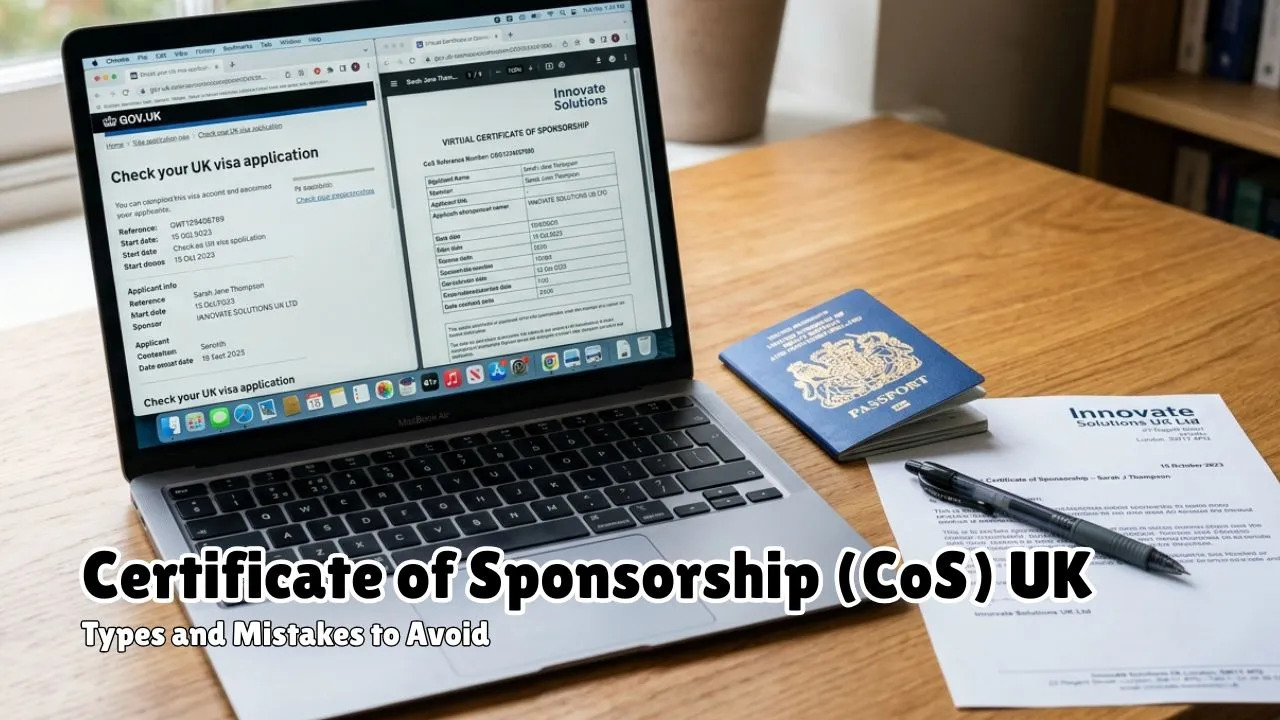
Most Skilled Worker Visa applicants aren’t called for an interview. The application is document-heavy and processed without one in the majority of cases. However, if UKVI has queries about your qualifications, your employer’s sponsorship, or your occupation, an interview may be requested.
The questions tend to be more technical than for a visitor or student visa. You’re expected to have detailed knowledge of your job role, your sponsoring employer, and the Certificate of Sponsorship (CoS).
4. About Your Job & Employer
Q: What role have you been offered in the UK?
A: I’ve been offered a position as a [job title, e.g. Software Engineer] at [company name] in [city]. The role involves [brief description of key responsibilities], and corresponds to SOC code [XXXX], which is an eligible occupation under the Skilled Worker route.
Q: How did you find this job?
A: I applied through [LinkedIn / company’s careers page / a recruitment agency] in [month/year]. After two rounds of technical interviews and a panel interview with the engineering leadership team, I received a formal offer in [month].
Q: Do you have a Certificate of Sponsorship?
A: Yes. My employer holds a Sponsor Licence and issued a CoS with reference number [XXXXXXXX]. All details are confirmed in the supporting documents.
Q: What is the salary for this role?
A: The annual salary is £[X], which is above the minimum threshold for this occupation code. The offer letter and payslip structure have been submitted with the application.
Q: Have you met anyone from the company in person?
A: I attended a video interview with the hiring manager and a follow-up technical assessment. I haven’t visited the office in person yet, but I’ve had regular contact with HR and my future team lead during the onboarding preparation.
5. Qualifications & Experience
Q: Do you meet the skill level for this role?
A: The role is classified at RQF Level 6. I hold a degree in [subject] from [university], which satisfies the educational requirement. I also have [X] years of relevant professional experience in [field].
Q: What English language evidence are you relying on?
A: I’m relying on my undergraduate degree from [Indian university], which was taught entirely in English, making me exempt from the English language test requirement. [Or: I took the IELTS Life Skills exam and scored B1 or above across all components.]
Q: Have you done a tuberculosis (TB) test?
A: Yes, I took the TB test at an approved clinic in India and received a clear certificate, which is included with my application.
6. Additional Work Permit Interview Questions
- Is your employer on the UK Home Office’s list of licensed sponsors?
- What is your notice period with your current Indian employer?
- Do you have family accompanying you to the UK?
- What are your long-term plans — are you hoping to settle permanently?
- Are you aware of the conditions attached to a Skilled Worker Visa?
- What would you do if this job ended while you were in the UK?
- Have you previously worked in the UK?
- What is the healthcare surcharge you’ve paid, and are you aware of your NHS entitlement?
[5] UK Visa Interview Questions for Dependants
Dependant visa applicants — typically spouses or children joining a main applicant in the UK — may be called for a separate interview. This happens most often for spouse/partner dependants where UKVI wants to verify the relationship independently.
If your partner is the main applicant (student, skilled worker), you as the dependant may be interviewed to check: that the relationship is genuine, that you understand where you’ll be living and what the main applicant does, and that your plans to relocate are genuine.
1. Dependant Interview Questions
Q: What does your partner/spouse study or do in the UK?
A: My husband is studying for an MSc in [subject] at [university name] in [city]. He’s in his first year and the course runs until [month/year].
Q: Where will you be living in the UK?
A: We’ll be living at [address] in [city]. My husband rented a flat ahead of my arrival, and I’ll be joining him there. We have a copy of the tenancy agreement as supporting evidence.
Q: Are you planning to work in the UK?
A: Yes, as a dependant on a student visa, I’m permitted to work up to 20 hours per week during term time and full-time during vacations. I’m a [profession] by background and I intend to explore work opportunities once I’ve settled.
Q: Do you have any children accompanying you?
A: Yes, our two children — aged [X] and [Y] — will be joining us. We’ve applied for their dependant visas simultaneously. School places have been arranged at [school name] in [city].
Q: What are your plans after your spouse completes their studies?
A: We intend to return to India together once my husband finishes his degree. Our home, our families, and our long-term lives are in India. This is a temporary move for his education.
2. Additional Dependant Visa Interview Questions
- How long have you and the main applicant been together?
- Do you have proof of the relationship — wedding certificate, photos, communications?
- Who will look after your children while you work?
- Do you have any health conditions that may require NHS treatment in the UK?
- Have you visited the UK before?
- How are you funding the move?
- What city will you be living in and why is it suitable for your family?
- Do you know anyone else living in that city who could support you?
How to Answer UK Visa Interview Questions: Expert Tips for Indian Applicants
Knowing the questions is only half the preparation. How you answer matters just as much — arguably more.
1. Be Consistent with Your Application
This is the number one rule. Your verbal answers must align precisely with what’s in your application form and supporting documents. Officers will have your file in front of them. If your application says you’re travelling to London and Manchester but you mention Brighton in the interview — that’s a red flag.
Before the interview, re-read your entire application form. Not just the highlights. Every field.
2. Be Specific, Not Vague
‘I want to visit the UK because it’s a nice country’ will not reassure an immigration officer. Specifics do. Name the exact cities, specific modules in your course, the particular reason you chose your accommodation, the actual dates of your return flight.
Specificity signals preparation. Vagueness signals coaching or lack of genuine intent.
3. Honesty Over a Perfect Script
Don’t try to memorise a perfect answer. Immigration officers are trained to spot rehearsed responses. A genuine applicant with an imperfect answer is far more convincing than someone who sounds like they’re reading off a teleprompter.
If you don’t know something, say you don’t remember the exact detail but offer to check. That’s human. Lying is not.
4. Disclose Previous Refusals Voluntarily
If you’ve been refused a UK visa or any other visa before, do not wait to be asked. Proactively mention it and explain what’s changed since then. Concealing a refusal and then being caught out is significantly worse than the original refusal itself.
5. Arrive (or Log On) Early and Prepared
Bring your original documents, your application reference number, and copies of everything submitted. For video interviews, test your connection, lighting, and audio the night before. Arriving late — in any format — creates a poor first impression before you’ve said a word.
6. Know Your Documents Inside Out
Officers sometimes ask you to explain a specific document. ‘This bank statement — can you explain this large deposit in March?’ You should know where every figure in your financial evidence comes from and be able to explain it calmly.
7. Keep Your Answers Measured
Answer what’s asked. Don’t volunteer unnecessary information. If they ask when you’re returning, give the date — don’t launch into a ten-minute explanation of why you’re coming back. Officers have many cases to get through, and concise, clear answers are appreciated.
Documents to Carry to Your UK Visa Interview
Whether your interview is in person or via video call, you should have these ready:
For All Visa Types
- Valid passport (and previous passports if applicable)
- Visa application confirmation / GWF reference number
- IHS (Immigration Health Surcharge) payment confirmation
- Three to six months of personal bank statements
- Proof of employment or self-employment in India
- Travel insurance documentation
Tourist Visa — Additional Documents
- Hotel/accommodation bookings
- Detailed travel itinerary
- Return flight booking confirmation
- Leave approval letter from employer
- Evidence of ties to India — property, family photos, etc.
Student Visa — Additional Documents
- CAS letter from the university
- Unconditional offer letter
- Academic transcripts and degree certificates
- IELTS or English language test scores
- Financial evidence — sponsor’s bank statements, scholarship letters
- TB test clearance certificate from approved clinic in India
Spouse/Partner Visa — Additional Documents
- Marriage certificate (translated if not in English)
- Evidence of ongoing relationship — chat history, call logs, photos, joint accounts
- Sponsor’s payslips (minimum 6 months) and employment contract
- Sponsor’s bank statements
- Accommodation evidence — tenancy agreement, mortgage statement
- Landlord’s permission letter (if renting and adding a new occupant)
Skilled Worker/Work Permit — Additional Documents
- Certificate of Sponsorship (CoS) details
- Job offer letter from the UK employer
- Degree certificates and professional qualifications
- CV / professional resume
- English language evidence
- TB test certificate
🛑 Common Mistakes Indian Applicants Make in UK Visa Interviews
- Giving inconsistent answers to the same question asked twice — officers sometimes re-ask to check consistency.
- Not knowing basic details about their university or course — even the city it’s in.
- Admitting to using an agent’s ‘template’ answers rather than their own words.
- Being unable to explain unusual financial transactions in their bank statements.
- Failing to mention a previous visa refusal when directly asked (dishonesty is treated very seriously).
- Saying they ‘might stay longer’ or ‘see how things go’ — fatal for visitor visas.
- Answering in very general terms without specifics — this suggests coaching rather than genuine knowledge.
- Panicking and changing an answer mid-sentence — if you’re not sure, ask for the question to be repeated or say you need a moment.
- Bringing an incomplete set of documents and being unable to provide requested evidence.
- For spouse visa applicants: not knowing key personal details about their partner that any couple would know naturally.
Frequently Asked Questions (FAQs)
Q: Is a UK visa interview compulsory for all Indian applicants?
A: No. Only a minority of applicants are called for interview. It’s triggered by risk-based selection — not by default. If you don’t hear from UKVI about an interview, your application is being processed without one.
Q: How long does a UK visa interview usually last?
A: Typically 15 to 30 minutes for student and tourist visas. Spouse visa interviews can run up to 60 minutes depending on the complexity of the case.
Q: Can I bring a friend, family member, or agent to the interview?
A: Generally not. You attend alone. If you need an interpreter, this must be arranged in advance with the Visa Application Centre. A family member cannot interpret on your behalf.
Q: What happens after the interview?
A: Your application returns to the standard processing queue. The officer does not give you a decision on the day. Processing for overseas applications typically takes 8–12 weeks after a spouse visa interview. For student visas, it may be quicker.
Q: Can I appeal if I’m refused after an interview?
A: It depends on the visa type. Visitor visa refusals generally don’t carry appeal rights. Spouse and family visa refusals may be appealed on human rights grounds under Article 8. You can also submit a fresh application addressing the specific concerns raised in the refusal letter.
Q: Should I hire a UK immigration solicitor to prepare for the interview?
A: For spouse and settlement visas especially, professional legal advice can be very valuable. An experienced immigration solicitor can review your evidence, identify weaknesses in your case, and help you prepare answers that address UKVI’s likely concerns. For straightforward student or tourist visa interviews, thorough personal preparation is usually sufficient.
Q: What if my English isn’t strong enough for the interview?
A: You can request an interpreter in advance. This is not penalised, as long as the rest of your application meets requirements. However, for a student visa — where English proficiency is part of the eligibility test — you will need to demonstrate your test results separately.
Final Thoughts
A UK visa interview, in most cases, is not as dramatic as it feels in anticipation. The officer is not your adversary. They’re doing a job — assessing whether your application is credible — and a prepared, honest, specific applicant makes that job easy.
The applicants who struggle are usually the ones who didn’t read their own application before the interview, or the ones relying entirely on answers an agent gave them without understanding the underlying logic.
Read your documents. Know your story. Tell the truth. That’s genuinely most of what you need.
If your case is complex — previous refusals, unusual financial arrangements, a relationship with gaps in the evidence — consider speaking with a registered UK immigration adviser (OISC-regulated) or an immigration solicitor before your interview. For straightforward cases, thorough personal preparation will serve you well.
Disclaimer:
UK Visa Consultant is affiliated with regulated immigration professionals with years of hands-on experience in successful UK visa applications. We closely monitor UKVI/Home Office updates and use only official guidance and sources. The information provided in this blog is subject to change depending on UK immigration laws and policies. It is recommended to stay updated regarding such changes and confirm the details through an official source before proceeding further. Our priority is unwavering accuracy and user trust. Here’s how you can maximize your success:
- Always rely on updates from the UK Government, the Home Office, and regulated immigration advisors.
- Keep up with the latest changes (e.g., digital eVisas, new sponsor requirements, post-Brexit rules).
- If in doubt, consult directly with an accredited UK immigration solicitor or OISC advisor.
- Ensure documentation, financials, and employment/education offers are fully compliant.
- Avoid scams and unregulated agents—your application’s credibility is paramount.
- Our consultants undergo regular professional development, maintain GDPR-compliant data handling, and provide transparent, ethical advice.



Leave a Reply
You must be logged in to post a comment.