



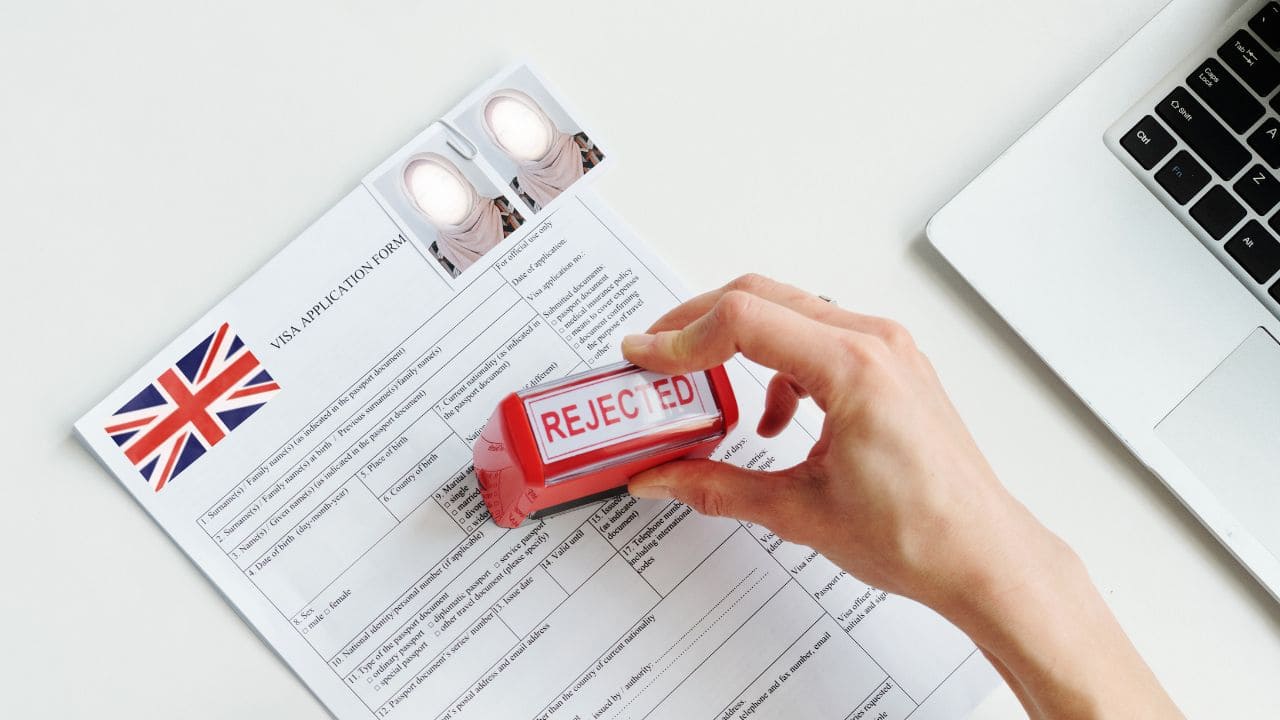

Your Complete 2026 Guide to Refusal Rates, Common Mistakes & How to Get It Right
Every year, tens of thousands of Indian nationals apply for a UK visa — and a meaningful number of them get refused. Sometimes it’s a technicality. Sometimes it’s a fundamental flaw in the application. And quite often, it’s something the applicant never even thought to question.
This guide covers everything you need to know about UK visa rejection reasons for Indian applicants — the actual data, the real patterns, what the Home Office is looking for, and how to not end up on the wrong side of that decision.
Whether you’re applying for a standard visitor visa, a student visa, a skilled worker visa, or a spouse visa, this guide will help you for sure.
UK Visa Rejection Rate by Country — How Does India Compare?
Let’s start with the data, because context matters. The UK Home Office processes millions of visa applications annually. UK visa refusal rates vary enormously depending on the applicant’s nationality, visa category, and even the time of year the application is submitted.
Here’s a breakdown of approximate UK visa rejection rates (visitor and student visa combined) across key nationalities, based on available Home Office data and independent analysis for 2024–2025:
| Country | Approx. Visitor Visa Approval Rate | Student Visa Grant Rate (2025) | Overall Risk Level |
|---|---|---|---|
| India | ~91% | 96% (Q1 2025) | Low–Medium |
| China | ~97% | 95%+ | Low |
| Nigeria | ~68% | 96% (up 7pp) | Medium–High |
| Pakistan | ~63% | 74% (down 8pp) | High |
| Bangladesh | ~60% | 63% (down 15pp) | Very High |
| Ghana | ~57% | Variable | High |
| Algeria | ~55% | Variable | Very High |
| UAE | ~99% | 99%+ | Very Low |
| Nepal | ~78% | 84% (down 14pp) | Medium |
| USA | ~98% | 98%+ | Very Low |
A few things to note. India sits in a comparatively favourable position — the 96% student visa grant rate in Q1 2025 was actually up five percentage points year-on-year. That’s genuinely encouraging. But the visitor visa rejection rate for Indians is still hovering around 8–9%, which translates to thousands of rejected applications per cycle.
So what is the UK visa rejection rate for Indians specifically? For student visas, it’s roughly 4–5% overall, with spikes of up to 12% in the first quarter of any given year. For visitor visas, it’s closer to 8–15% depending on the applicant’s profile and the strength of their application. For spouse and family visas, refusal rates are higher — often 14–20% — primarily driven by the tightened minimum income requirements introduced in April 2024.
What Are the Most Common UK Visa Rejection Reasons for Indian Applicants?
The Home Office doesn’t always explain every refusal in granular detail. But immigration practitioners and legal professionals who handle these cases daily see clear, recurring patterns. Here are the main ones — ranked by how frequently they come up.
1. Insufficient Financial Evidence
This is the number one reason. It comes up again and again. Not just for Indian applicants — but Indians, particularly those applying for visitor or student visas, often trip here in ways that are entirely avoidable.
What the Home Office is looking for:
- Bank statements covering at least 28 consecutive days
- Funds that have been held consistently — not suddenly deposited just before the application
- A clear source of income or funds (salary, business income, savings — all must be traceable)
- Sufficient funds relative to the stated purpose and duration of the trip
Where Indian applicants go wrong:
- Large, unexplained deposits appearing days before the application
- Statements that show irregular balances — high one month, low the next
- Sponsorship letters that are vague or unaccompanied by the sponsor’s own financial documents
- Providing savings account statements without accompanying current account history
For a student visa specifically, UKVI requires proof of tuition fees plus living costs — £1,334 per month (outside London) or £1,600 per month in London — held for 28 consecutive days. This must be shown before the CAS (Confirmation of Acceptance for Studies) is assigned.
2. Failure to Demonstrate Intent to Return — The ‘Ties to Home Country’ Problem
This one is subtle but crucial. UK visit visas are granted on the understanding that the applicant will leave at the end of their permitted stay. If UKVI has any reason to doubt this, they will refuse.
For Indian applicants, this often manifests as:
- No clear employment to return to — unemployed applicants, freelancers with no formal contracts, or students without a clear study timeline
- No immediate family members remaining in India (especially relevant for middle-aged or older applicants)
- Young, single applicants with no property, dependants, or long-term financial commitments in India
- Previous travel history that shows extended stays abroad or visa overstays in other countries
The Home Office isn’t trying to assume the worst. But their job is to satisfy themselves that you will come back. Applications that don’t proactively address this — through employment letters, property ownership documents, family ties, or return travel bookings — leave a gap that caseworkers will fill with doubt.
3. Incomplete, Incorrect, or Inconsistent Documentation
Missing pages in a passport. A bank statement with a name that doesn’t exactly match the passport. A cover letter that contradicts information in the application form. These aren’t minor issues — they are frequently cited UK visa rejection reasons.
Common documentation errors that may lead to UK visa rejection:
- Incomplete application form with blank fields where information was required
- Certified translations not provided for documents in regional Indian languages
- Academic transcripts that don’t match the course listed in the CAS (for student visas)
- Employment letters that are undated, unsigned, or lack official company letterhead
- Photographs that don’t meet UK biometric photo requirements
The rule of thumb: if a document exists, provide it. If a document isn’t in English, translate it properly. If a piece of information could be questioned, explain it proactively in a cover letter.
4. Credibility and Genuineness Concerns — Especially for Student Visa Applicants
For student visas, UKVI places significant weight on whether the applicant appears to be a genuine student. This has become more rigorous since the 2024 policy changes. A credibility assessment looks at whether the applicant’s academic history, chosen course, and stated career goals form a logical, coherent narrative.
Red flags that increase the UK student visa rejection rate:
- Applying for a postgraduate course that has no connection to your undergraduate degree
- Choosing a low-ranked university for an expensive course — without a credible academic reason
- Interview responses that are inconsistent with what’s in the application
- Evidence that the applicant has applied to multiple, conflicting course types simultaneously
- CAS details that don’t match what’s stated in the visa application form
Indian applicants who want to work in the UK and are using a student visa as a route — even if that’s genuinely the case — need to be especially careful. The application needs to tell a clean story. Academic progression should make sense. Your personal statement or GTE (Genuine Temporary Entrant) statement needs to be coherent, specific, and honest.
5. Prior Immigration History and Undisclosed Refusals
This is where applications can really unravel. If you have previously been refused a UK visa — or a visa to any other country — and you don’t declare it, UKVI will likely find out. Visa databases are increasingly linked internationally. And failing to disclose a prior refusal is treated as deception.
Similarly, if you overstayed a previous UK visa, or were deported from another country, the chances of a successful new application drop significantly unless you can provide compelling evidence of changed circumstances.
Always declare prior refusals. Always. Your immigration solicitor or a visa consultant can help you contextualise them properly.
6. English Language Requirements Not Met
For UK student visas, English language proficiency is a hard requirement. The specific test and minimum score depends on the level of the course and the institution. IELTS Academic, PTE Academic, TOEFL iBT, and a small number of other approved Secure English Language Tests (SELTs) are accepted.
Rejection happens when:
- The test certificate has expired (most are valid for two years)
- The score achieved doesn’t meet the university’s CAS requirements
- An unapproved test was used — not all IELTS formats are accepted for UK visa purposes
- The name on the test certificate doesn’t match the passport exactly
7. Wrong Visa Category Applied For
Sounds obvious. But it happens. Applying for a standard visitor visa when you’re actually intending to work remotely, attend a paid conference, or set up a business — those are all potential visa violations that savvier applicants sometimes stumble into. Applying for a student visa when a short course visitor visa would have sufficed also causes complications.
The UK’s visa categories are specific. A Standard Visitor Visa covers tourism, short business visits (unpaid), attending conferences, and visiting family. It does not cover paid work, long-term study, or establishing a business operation. Getting the category wrong means an automatic refusal and a note on your immigration record.
8. Criminal Record or Security Concerns
Any criminal conviction — including minor offences — can affect a UK visa application. The Home Office assesses character and suitability as part of the application process. Concealing a criminal record will result in refusal and can lead to a ban on future applications. Some offences result in mandatory refusals under the Immigration Rules; others are assessed on a case-by-case basis.
What Are the Chances of UK Visa Rejection for Indians?
It depends enormously on the visa type and the quality of your application.
- Student visa: approximately 4–5% overall refusal rate in 2024; 12% in Q1 2025 (higher first-quarter rates are typical)
- Visitor visa: approximately 8–15% refusal rate for Indian applicants, depending on profile
- Spouse / family visa: approximately 14–20% refusal rate nationally, with income threshold the primary barrier
- Skilled Worker visa: very low refusal rate (under 5%) for those who genuinely meet the salary threshold
What significantly reduces your chances of rejection:
- Strong, consistent financial documentation with a clear audit trail
- A convincing narrative of why you’re going, what you’ll do, and why you’ll return
- Applying with the correct visa category for your actual purpose
- Disclosing everything — prior refusals, travel history, any gaps in employment or study
- Allowing adequate time — applications made too close to travel dates often fail not on content but on timing
UK Visa Rejection Rate for Indians — Student Visa Specific
The UK student visa rejection rate for Indians is genuinely low by global standards. India achieved a 96% grant rate in Q1 2025 — up from 91% in the same period in 2024. That’s a meaningful improvement, partly attributed to the UK–India Free Trade Agreement finalised in May 2025, which created clearer academic qualification recognition pathways.
But — and this matters — the rejection rate rises sharply for applications that:
- Are submitted in Q1 or Q4 of the year (lower volume periods with relatively higher scrutiny per application)
- Come from universities with historically high refusal rates across their international cohort
- Involve students switching courses or taking lateral academic moves without adequate explanation
- Show evidence of the applicant’s primary goal being work rather than study
What is the rejection rate of UK student visa? For Indian students specifically, approximately 4% annually in 2024, rising to around 12% in Q1 2025 — though this Q1 spike is consistent with historical trends and is not necessarily an indicator of tightening policy toward Indian applicants specifically.
After UK Visa Rejection — When to Reapply and What to Do
Getting a refusal is frustrating. But it’s not the end. Here’s what you should do immediately.
Step 1: Read the Refusal Letter Carefully
The UK visa refusal letter will specify the reasons for rejection. Read every word. Don’t skim it. The reasons cited in the refusal letter are your roadmap for the reapplication. UKVI caseworkers are required to state their reasons — and those reasons are actionable.
Step 2: Determine Whether to Appeal or Reapply
There are two routes after a refusal:
- Administrative Review: Available if you believe the caseworker made an error in applying the Immigration Rules. You have 14 days to apply if you’re in the UK, 28 days if you’re outside. This is not a fresh application — it’s a review of the original decision.
- Fresh Application: You reapply from scratch, addressing the specific refusal reasons. There is no mandatory waiting period before reapplying for most visa categories — but reapplying immediately without addressing the refusal reasons is not advisable.
After UK visa rejection, when to apply again? The practical answer: when you can genuinely address the reasons for refusal. For documentation issues, that might be immediately. For financial concerns, it might mean waiting until your bank statements show a more consistent picture. For credibility concerns, it might mean strengthening your application fundamentally.
Step 3: Get Professional Advice
If your refusal letter raises credibility concerns or mentions deception (even if unintended), or if you’ve been refused more than once, it’s worth consulting a regulated UK immigration solicitor before reapplying. The stakes are higher each time. A poorly handled second application can make a third even more difficult.
How to Avoid UK Visa Rejection — Practical Steps That Actually Work
These aren’t abstract tips. They’re based on the actual refusal patterns seen across thousands of applications.
- Apply with the correct visa category — verify this before anything else.
- Start building your financial paper trail at least three months before applying. Don’t move large sums around in the 60 days before submission.
- Get an employment letter that covers start date, current role, salary, approved leave dates, and confirmation you’re expected to return.
- For student visa applications, ensure your personal statement and GTE response creates a coherent narrative — course chosen, why this institution, career plan post-study, and why you’ll return to India.
- Declare everything. Prior refusals, criminal history, immigration violations in any country. Omission is treated as deception.
- Apply at least 3 months before your intended travel date for visitor visas; as soon as your CAS is issued for student visas.
- Use only approved Secure English Language Tests — and check the expiry date on your certificate.
- Get a professional document checklist review before submission. A second pair of eyes from someone who knows what UKVI is looking for is worth its weight.
Why Indian Applicants Face Specific Scrutiny — and Why It’s Improving
It would be disingenuous to ignore this. India has historically been among the top source countries for UK visa applications, and with volume comes scrutiny. The UK’s immigration system — particularly post-Brexit — is designed to control net migration while remaining open to genuine visitors, students, and workers.
The political context matters too. The UK has tightened rules around dependants (2024), raised salary thresholds for Skilled Workers (April 2024), and increased the minimum income requirement for spouse visas. These changes have reduced application volumes but haven’t disproportionately targeted Indian applicants.
If anything, the trajectory for Indians is positive. The 96% student visa grant rate in Q1 2025, the UK–India FTA, and the increasing bilateral education partnerships suggest the relationship between the two countries on migration is strengthening — not contracting.
But the fundamentals don’t change. Strong applications get approved. Weak applications — regardless of nationality — get refused.
Frequently Asked Questions (FAQs)
Q. What is the UK visa rejection rate for Indians on student visas?
Approximately 4–5% overall in 2024. In Q1 2025, the refusal rate was around 4% for Indian applicants specifically, against a global rate closer to 12%. India’s grant rate of 96% in Q1 2025 was one of the highest among major source countries.
Q. Can I reapply immediately after a UK visa rejection?
Yes. There is no mandatory waiting period. However, reapplying without materially addressing the reasons for refusal is rarely successful and creates a record of repeated failures that complicates future applications.
Q. Does a UK visa refusal affect future applications?
Yes, it must be declared in all future UK visa applications. A prior refusal is not automatically disqualifying — but failing to declare it is. If you address the original reasons comprehensively in a subsequent application, approval is still entirely achievable.
Q. What are the chances of UK visa rejection if I’ve been refused before?
A prior refusal does increase scrutiny on your next application. The chances of success on reapplication depend entirely on how thoroughly you’ve addressed the original reasons. Applications handled by a qualified immigration solicitor tend to have better outcomes in these cases.
Q. How much bank balance is needed for a UK visa from India?
For visitor visas, there’s no fixed official minimum, but as a practical benchmark, most practitioners suggest having at least INR 3,00,000 readily accessible per person, held consistently for 28 days. For student visas, you must show tuition fees plus £1,334/month (outside London) or £1,600/month (in London) for nine months.
Q. What is the UK student visa rejection rate in 2025?
Overall, approximately 4.75% across all nationalities. For Indian students specifically, it’s lower — around 4% — with Q1 2025 showing an 88% overall grant rate globally, but a 96% grant rate specifically for Indian applicants.
Final Thoughts
UK visa rejections for Indian applicants are not inevitable. The data shows that a well-prepared, honest, complete application from an Indian national has a very high probability of success — especially for student visas.
The reasons for UK visa rejection are, in the vast majority of cases, addressable. Financial documentation can be strengthened. Cover letters can proactively explain ambiguities. Wrong visa categories can be identified before submission. Prior refusals can be properly contextualised.
What doesn’t help is panic, guesswork, or last-minute applications assembled without proper thought. What does help is treating the visa application as seriously as the opportunity it represents.
If you’re unsure, speak to a regulated UK immigration adviser. The UK government’s Find an Immigration Adviser service (gov.uk/find-an-immigration-adviser) allows you to search for OISC-registered advisers by location and immigration matter type.
Disclaimer:
UK Visa Consultant is affiliated with regulated immigration professionals with years of hands-on experience in successful UK visa applications. We closely monitor UKVI/Home Office updates and use only official guidance and sources. The information provided in this blog is subject to change depending on UK immigration laws and policies. It is recommended to stay updated regarding such changes and confirm the details through an official source before proceeding further. Our priority is unwavering accuracy and user trust. Here’s how you can maximize your success:
- Always rely on updates from the UK Government, the Home Office, and regulated immigration advisors.
- Keep up with the latest changes (e.g., digital eVisas, new sponsor requirements, post-Brexit rules).
- If in doubt, consult directly with an accredited UK immigration solicitor or OISC advisor.
- Ensure documentation, financials, and employment/education offers are fully compliant.
- Avoid scams and unregulated agents—your application’s credibility is paramount.
- Our consultants undergo regular professional development, maintain GDPR-compliant data handling, and provide transparent, ethical advice.





Leave a Reply
You must be logged in to post a comment.